Fleet tracking and management
Know where your vehicles are, how they are driven and what they cost you. Our telematics runs from real-time tracking to reading more than 300 parameters on the CAN bus, with a platform developed at our own offices in Nivelles.
Three pillars, one platform
Real-time tracking
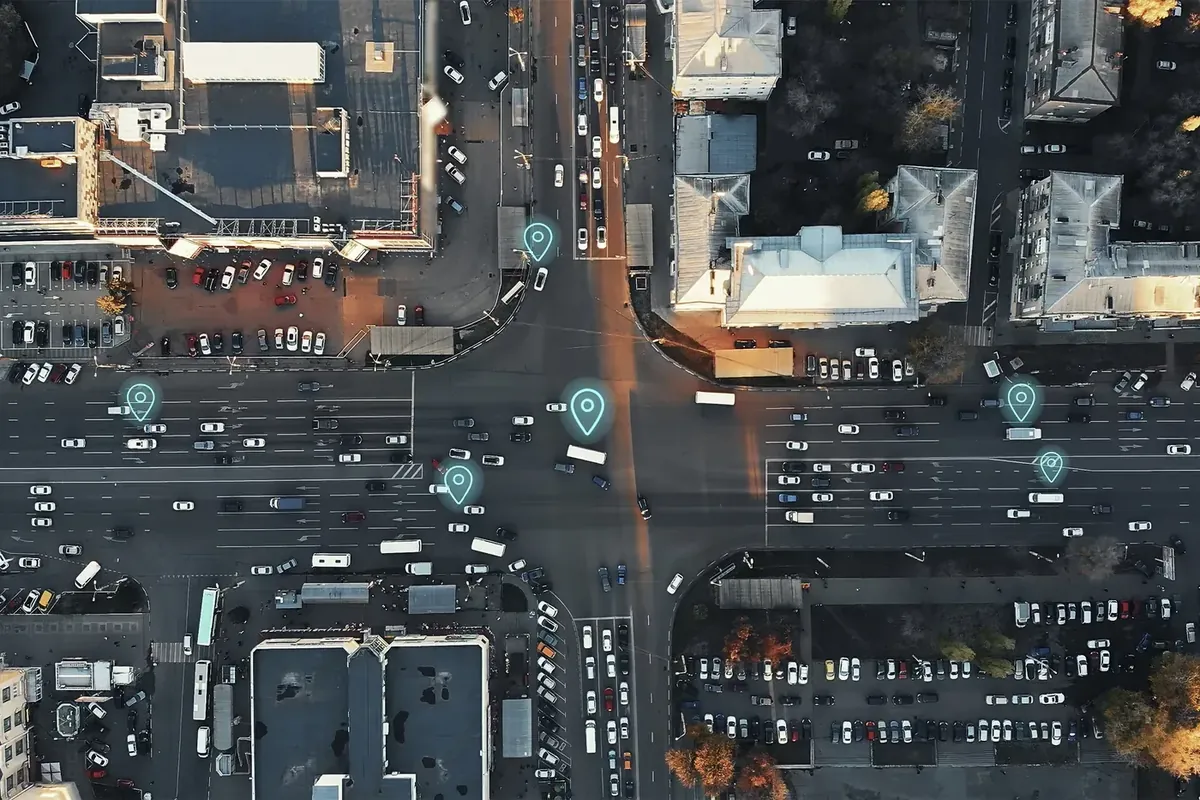
Positions updated continuously, trip history, geofencing with zone entry and exit alerts, notifications by email or in the app.
Customised features
Every fleet has its own rules. Tailor-made reports, alerts set to your thresholds, a dashboard built around your organisation, white-labelled if you wish.
Usable information
Mileage, fuel consumption, driving times, costs per vehicle. Figures that support your decisions rather than decorative curves.
More than 300 parameters read from the CAN bus
Our units do not stop at a GPS position. Connected to the vehicle's CAN bus, they read engine speed, actual fuel consumption, fuel level, fault codes, load, and more than 300 other parameters depending on the model.
It is also the basis for the advanced functions: remote engine cut-off (SECO), immobilisation in case of theft, diagnostics without a workshop visit.
- Actual fuel consumption and fuel level, not estimates
- Manufacturer fault codes reported in real time
- Remote engine cut-off (SECO) on compatible vehicles
- Engine hours for machines that drive little but run a lot
The technical corner
Private / business mode, GDPR compliant
The driver hides private trips with one click, with three masking modes. Masking switches off automatically in case of towing, disconnection or accident. Tax reports come out in one click.
Integrated tachograph
Driver card and vehicle memory data download automatically, remotely. Details on the remote tachograph page.
Migration without starting from scratch
Already running a tracking system? We organise the switch in waves, without interrupting your operations, and recreate your vehicles and zones in the platform. Depending on your original system, some of the hardware or data can sometimes be reused; we check this case by case.
Electric fleet and 2026 taxation
Since January 2026, Belgian taxation has been pushing fleets towards zero emissions. Range, state of charge and cost per kilometre of your electric vehicles appear in the same place as the rest of the fleet.
Every trip accounted for, without the paperwork
Anyone running a fleet eventually has to justify a trip. For the tax office, for a customer disputing a journey, or for a driver wondering why the mileage does not add up.
The platform records every trip: start, end, duration, distance and driver. You export the period you need, per vehicle or for the whole fleet, and private trips stay masked according to the private / business mode.
- Trips split automatically by vehicle and by driver
- Export for your accounts or through the platform API
- Mileage read on the CAN bus, not estimated
- Tax reports in one click, as for private mode
Real-time fleet tracking: what you actually see
Fleet tracking is more than a dot moving across a map. Here is what the platform shows, and what our customers look at every morning.
- Positions and trips in real time on the map
- Push notifications: zone exit, jamming, suspicious movement
- History and reports, available anywhere
- Mileage, fuel consumption and engine hours per vehicle
- Dashboard built around your organisation, white-labelled if you wish
The modules, the API and the mobile app are described on the platform page. Tracking works the same way on a truck, a construction machine or a van.
Telematics or a plain GPS tracker: the difference
Both show a position. What comes next is what separates a tracker from a telematics system.
| Feature | GPS tracker only | CAN bus telematics |
|---|---|---|
| Position and trips | Yes | Yes |
| Real fuel consumption | No | Yes, read on the CAN bus |
| Engine fault codes | No | Yes |
| Engine hours | No | Yes |
| Remote tachograph | No | Yes |
| Engine cut-off (SECO) | No | Yes, on compatible vehicles |
| Installation | Standalone, no wiring | Connected to the CAN bus |
For one or two vehicles a standalone tracker is often enough: see the GPS tracker for private vehicles or the company car tracker. As soon as there are drivers, rounds and costs to justify, telematics pays for itself. Eco-driving and asset tracking rely on the same data.
Frequently asked questions
How many vehicles does it take to pay off?
Our customers range from 3 to several hundred vehicles. From just a few vehicles, fuel savings, the end of unjustified mileage and the time saved on paperwork cover the subscription. We work out the figures with you based on your actual fleet.
Does installation take vehicles off the road for long?
Allow one to two hours per vehicle depending on the level of integration (simple tracker or CAN bus connection). We schedule installations in waves so your operations are not disrupted, in Nivelles or on your site.
Can drivers be tracked without breaching the GDPR?
Yes, provided a proper private / business mode is used. Ours hides private trips at the driver's request and documents the purpose of the processing. We supply the elements to include in your GDPR register.
Do your units work on all makes?
GPS tracking works on any vehicle. The depth of CAN bus reading depends on the make and model; we confirm compatibility before the offer, vehicle by vehicle.
What is the difference between vehicle tracking and fleet management?
Vehicle tracking shows where a vehicle is. Fleet management adds the context: who drove, what the trip cost, when the service is due, whether the driving style burns fuel. The same unit provides both; the difference lies in what you do with the data.
Can I export trips for my accounts?
Yes. The trip register exports per vehicle or for the whole fleet, over the period you choose. Private trips stay masked according to the private / business mode.
Do you handle mixed vehicle fleets?
Yes. Company cars, vans, trucks and machines sit in the same platform, with their own rules per category. Mixed fleet management is the most common case among our Belgian customers.
Fleet tracking or fleet management: what is the difference?
Fleet tracking is knowing where the vehicles are and where they have been. Fleet management adds what you decide next: cost per vehicle, upcoming servicing, driving style to correct, trips to justify. The same unit feeds both.
How much for your fleet?
Tell us how many vehicles you run and what you want to track. You receive a priced proposal, with no obligation.