
Eco-driving
Fuel, wear and claims are decided by the right foot. Our eco-driving module measures acceleration, braking, speeding, harsh cornering, idling and over-revving, gives every driver a driving score and helps them improve. Target: up to 10 to 15 % less fuel, depending on the starting point.
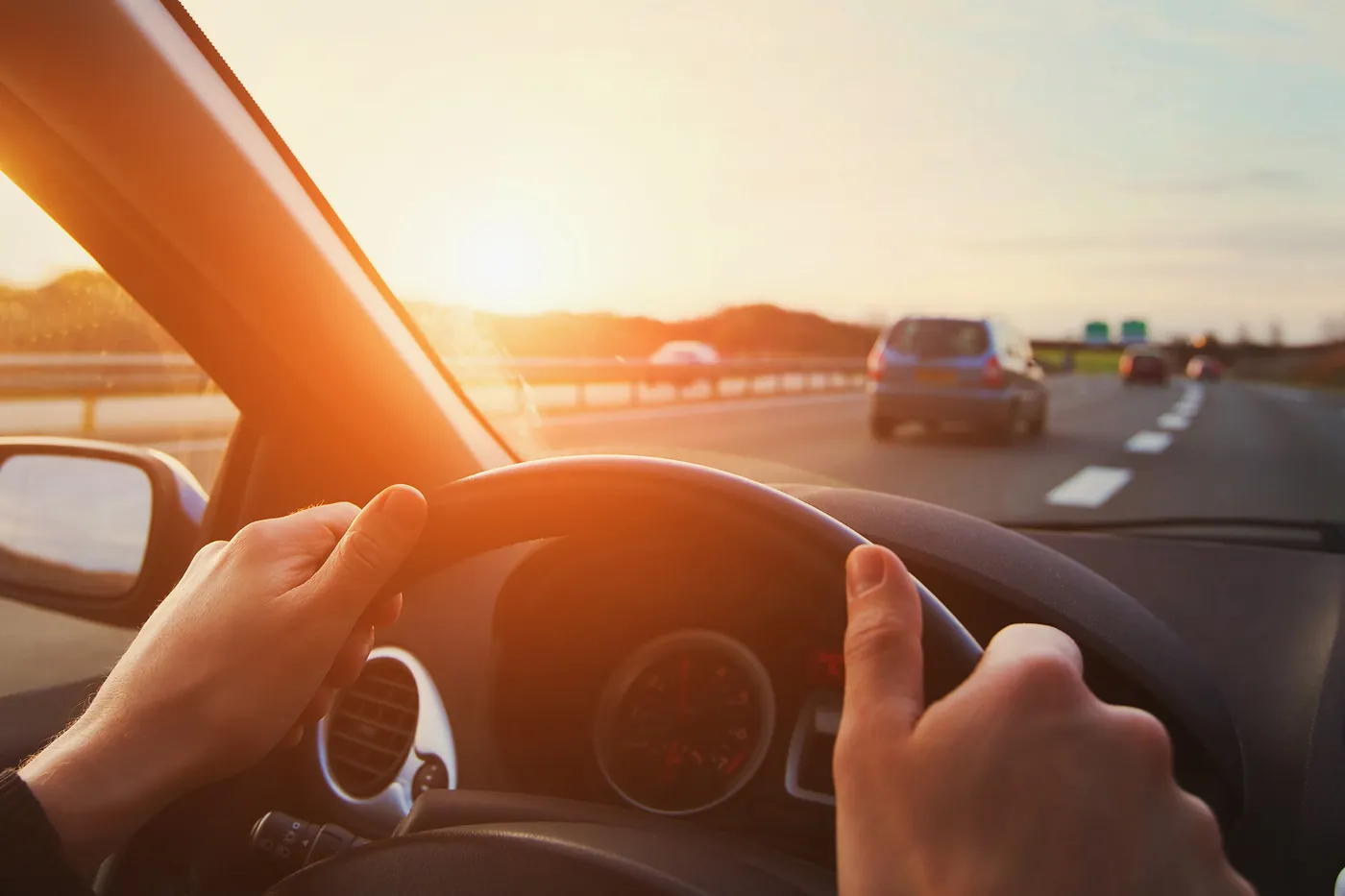
Aggressive driving is expensive on every front at once
Same vehicle, two drivers, two bills. Harsh driving does not show up on a classic dashboard, but you pay for it every month.
- Excess fuel consumption: hard acceleration, late braking and excessive speed burn litres for nothing
- Premature wear: tyres, brakes, clutch and suspension go faster when the driving is rough
- High claims and insurance premiums: more knocks, a driving record that weighs on your terms
- A carbon footprint that is hard to cut and document: without measurement there is no proof for your ESG reporting
- No objective way to hold drivers accountable: impressions are debatable, figures are not
Measure, alert, improve
Driving event detection
Harsh acceleration, heavy braking, sharp cornering, speeding, prolonged idling and engine over-revving: every event is recorded with its position, time and context. Not impressions, facts.
Immediate in-cab feedback
A discreet LED and buzzer warn the driver at the very moment a threshold is crossed. The correction happens on the spot, with no report and no meeting, before the slip becomes a habit.
Eco-driving score per driver
Each driver receives a comparable score, tracked over time, with comparative reports and a ranking. Several of our customers use it as a basis for bonuses indexed on improvement.
FMS eco variant: the score built on the truck's own data
On heavy vehicles, the module reads the CAN bus through the FMS interface (J1939 standard) and calculates an eco-driving score from the data reported by the manufacturer: engine speed, torque, instant consumption, engine brake usage, time spent idling.
The score gains precision because it relies on what the vehicle measures itself, not just the unit's accelerometer. Ideal for a mixed fleet tracked on a single platform.
- Truck CAN bus reading via FMS interface (J1939)
- Engine speed, torque, instant consumption and engine brake taken into account
- Prolonged idling separated from useful engine hours
- Gamification: ranking, targets, bonuses indexed on the score
What it changes, in cautious figures
Smoother driving means less fuel, less wear on brakes, tyres and clutch, and fewer accidents. Idling often accounts for a notable share of engine hours: making it visible is already the first step to cutting it. And a clean driving record becomes a measurable argument, both for your CO2 reporting and for negotiating your premiums.
A telling example
A fleet of 40 vans in transport and logistics. Two drivers run the same round, but one consistently uses more than the other. Before, nobody could prove it.
With the module, every round produces a score. The driver gets their LED alert live on heavy braking, the manager sees the ranking on Monday morning. Three months later the gap has narrowed and the fleet average has dropped, without changing a single vehicle.
- Score per round and per driver, comparable over time
- Live in-cab alert, coaching without a meeting
- Bonus indexed on the improvement of the score
- Same unit as fleet management, one platform
Frequently asked questions
How do you reduce fuel consumption through driving behaviour?
Excess consumption comes mainly from harsh acceleration, late braking, excessive speed and prolonged idling. By measuring these events and alerting the driver live, driving becomes smoother: fewer bursts of throttle, more anticipation. On a benchmark, the potential reaches up to 10 to 15 % depending on the starting point. We prefer to measure the real gain on your fleet rather than promise a generic percentage.
What is an eco-driving score and how do you improve it?
It is a figure calculated from weighted driving events (acceleration, braking, cornering, speed, idling, over-revving), comparable between drivers and tracked over time. You improve it by anticipating stops, keeping a steady speed, cutting needless idling and changing up earlier. The in-cab alert and the ranking make those reflexes concrete, round after round.
Can the system alert the driver in real time to harsh braking or acceleration?
Yes. A discreet LED and buzzer in the cab trigger at the very moment of the threshold breach, set per event type. The driver corrects live instead of discovering a reproach afterwards. It is this immediate feedback that installs the right reflexes, without turning the dashboard into a classroom.
Can eco-driving reduce my fleet insurance premium?
A documented driving record and an improving score are concrete arguments to present to your insurer or broker. Depending on the insurer and the improvement observed, a premium reduction of 5 to 15 % is conceivable, but it depends on each contract. The module provides the reports that back up the approach; the decision remains the insurer's.
How do you compare drivers objectively without antagonising them?
The module measures the driving, not the person: same rules, same thresholds, same score for everyone. Presented with a clear goal, fuel, safety, bonuses, it is generally well accepted, especially since the in-cab alert helps the driver live instead of punishing them. The private / business mode also protects personal trips, in line with the GDPR.
Does eco-driving need a dedicated unit?
No. Eco-driving uses the same telematics unit as fleet tracking, with or without CAN bus reading. On trucks, the FMS variant reads manufacturer data directly through the J1939 interface. The in-cab LED and buzzer are a small hardware option added to the installation.
Go further
Fleet management
Real-time tracking, CAN bus reading and reports: the platform that hosts your scoring.
Learn moreTransport and logistics
Trucks, tachograph, cold chain: eco-driving at the service of hauliers.
Learn moreRemote tachograph
Automatic download of driver cards and vehicle data, with no trip to the workshop.
Learn moreFleet maintenance
Engine hours, idling and fault codes: less wear as the driving settles down.
Learn moreBring the fuel bill down
Request a quote: we configure the scoring for your vehicles and your routes, with or without the in-cab alert, and the FMS variant for your trucks.