
GPS tracking for farm machinery
A tractor is not measured in kilometres but in hours, and it works far from watchful eyes. Fuel that vanishes, machine and seasonal-worker hours that are hard to prove, equipment scattered across large areas: our tractor tracking follows your farm machinery wherever it is, in the fields, at customers' farms, and sometimes on a thief's route.
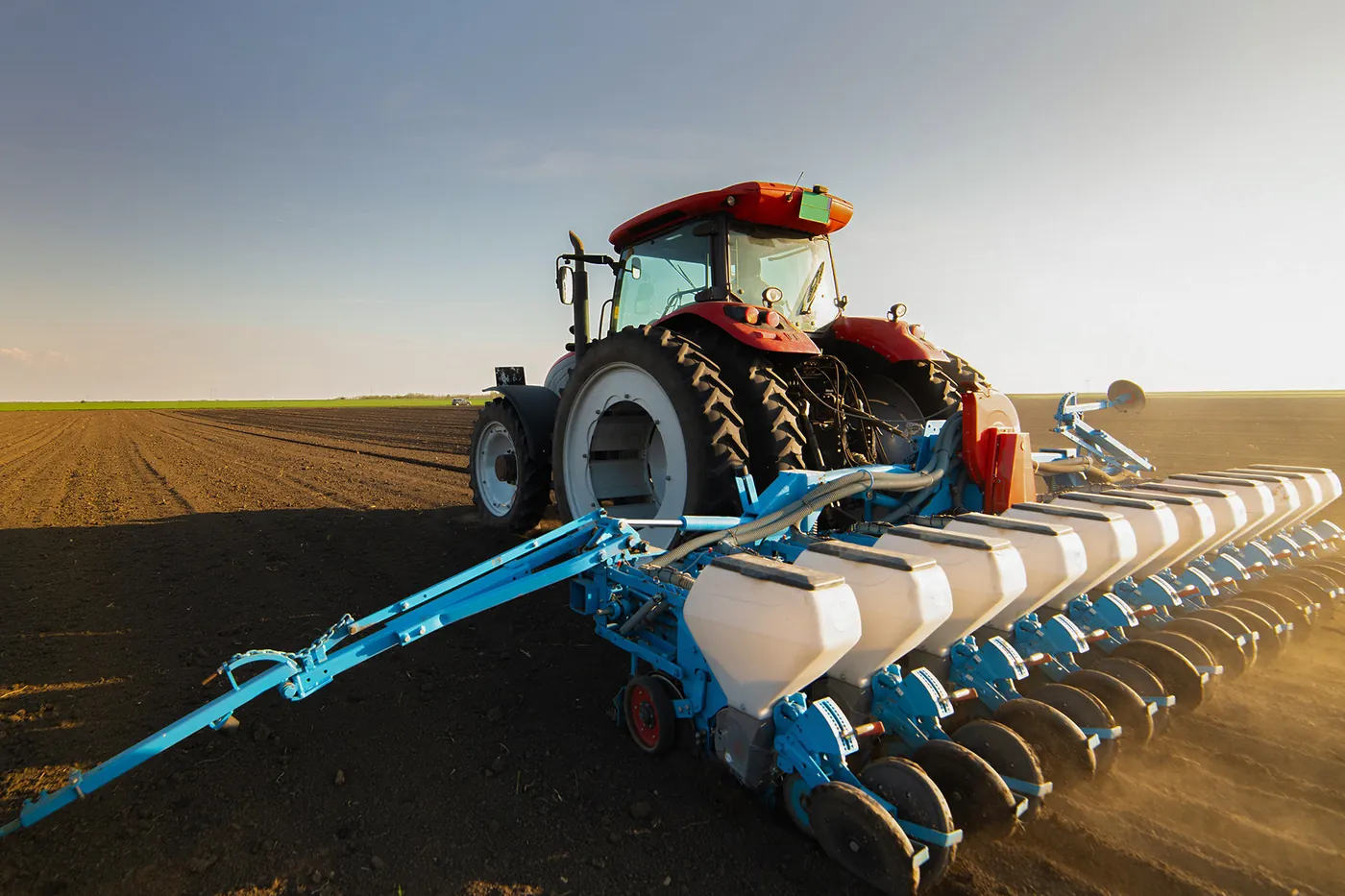
Agriculture fleet tracking, every machine on one map
From the tractor to the trailer, from the combine harvester to the telehandler, your farm fleet lives scattered across dozens of hectares and job sites. Our agricultural fleet management platform brings them onto a single map: every machine located, real engine hours known, maintenance anticipated.
Self-propelled machines
Tractors, combine harvesters, forage harvesters, self-propelled sprayers, loaders and telehandlers: live position, engine hours, fuel and CAN bus data where the machine allows it.
Towed and mounted equipment
Farm trailers and tipping bodies, balers, seed drills, tanks and mounted tools: wireless battery trackers, up to 5 years of life, so you never lose a tool in a field again.
Whether you track five tractors or a mixed fleet of dozens of machines, farm vehicle tracking runs from the same interface, with reports per machine, per field and per farm.
The fuel leaves, the hours go missing
On a farm, losses are not obvious right away. A tank empties overnight without anyone noticing. The hours actually worked by a machine or a seasonal worker stay a rough guess. During the campaign, every hour of harvesting or spreading counts, and so does every litre burned. And the equipment is spread across large areas, often in zones with poor network coverage.
Agricultural telematics puts numbers on what used to be guesswork: where the machines are, how many hours they really ran, and what goes in and out of their tanks.
Telematics that speaks farming
Engine hours and maintenance
Servicing is triggered by actual engine hours, not the calendar. Machines that run hard in season no longer skip their overhaul, and those that sit idle over winter do not go to the workshop for nothing.
Zones and fields
Geofencing per field, per farm or per customer: working time per zone, proof of work for agricultural contractors, an alert if a machine leaves the perimeter.
Machinery theft protection
Farm machinery can cross the border within hours. Motion detection outside set hours, live tracking, even without internet coverage. Engine immobilisation available on compatible machines.
Trailed equipment and implements
Self-powered trackers on trailers, balers and mounted implements: up to 5 years on one battery, no wiring, sealed units (IP67) fitted in minutes.
Every fill, every siphon, time-stamped
Our level probes, wired or wireless, measure the fuel in the tanks of your tractors, combines and mobile bowsers. A refill shows up as a clean rise, a siphon as a sharp drop, often at night and outside working hours. You get the alert the moment the level moves, not when the invoice arrives at the end of the month.
Combined with driver identification by iButton (RFID 1-Wire), every reading is tied to a machine and a person. The angular movement sensor tells real work apart from a simple transfer, for hours that reflect what actually happened in the field.
- Level probes, wired or wireless, matched to the tank
- Refills and siphoning detected and time-stamped
- Immediate alert on a drop in level outside working hours
- Driver identification by iButton (RFID 1-Wire)
- Real work measured by angular movement and power take-off (PTO), depending on the machine
What your combines report
On recent machines with a usable CAN bus, our units read far more than a position. Harvest data comes in live, aggregated per field and per machine.
Area and throughput
Harvested area, cutting efficiency and throughput per hour. Enough to compare fields, machines and drivers on a factual basis.
Grain quality
Grain moisture and threshing status reported during the job, so settings can be adjusted without waiting for the end of the field.
Hours and maintenance
Harvest hours and real engine hours: the basis for maintenance planned at the right time, before a breakdown in mid-campaign.
A contractor who invoices fairly
An agricultural contractor works across some thirty farms during the campaign. Before, invoiced hours relied on notebooks filled in from memory, a source of argument at the end of every season. With per-field geofencing and engine hours, every job is dated, located and priced. The invoice comes out machine by machine, farm by farm, ready to be backed up.
That same season, an overnight drop in level on a mobile bowser triggers an alert: a siphon stopped before the tank ran dry. One example among many of what fuel monitoring helps avoid.
- Invoiced hours backed by data, not by memory
- Billing disputes avoided
- Siphoning detected as it happens
- Reports per field and per customer, ready to attach to the invoice
What you gain
The gains depend on your fleet and your organisation. We price the equipment machine by machine, with realistic targets rather than promises.
Farms outside Belgium
We ship the hardware across Europe. The platform, the alerts and the support work the same wherever the machine stands, and our team answers in French, Dutch and English.
Self-powered trackers need no wiring at all: you fit them yourself in a few minutes, which is what most machines and trailers use. A CAN bus integration does need a fitter, and we only install in Belgium. Outside, your own workshop does the fitting and we brief them beforehand.
The INCERT approval covers Belgian insurers. Abroad, ask your insurer what it accepts before ordering, and tell us what you need.
- Hardware shipped, platform and support from Nivelles
- Self-powered trackers: no wiring, fit them yourself
- CAN bus integration: fitted by your own workshop outside Belgium
- Support in French, Dutch and English
Frequently asked questions
What is agricultural fleet management?
Agricultural fleet management means tracking all of your machines, tractors, combine harvesters, trailers and tools, from a single platform: real-time position, engine hours, fuel, maintenance and anti-theft. The goal is to always know where each machine is, how many hours it has really worked and what it consumes, so you decide on figures rather than guesswork.
Which farm vehicles and machines can you track?
Tractors, combine harvesters, forage harvesters, sprayers, loaders and telehandlers on the self-propelled side; trailers, tipping bodies, balers, seed drills and mounted tools on the towed side. Recent machines also stream CAN bus data, while older ones are tracked with a standalone unit. Even equipment with no power supply is located thanks to long-life battery trackers.
How do I detect fuel theft on a tractor or combine?
A level probe, wired or wireless, tracks the fuel in the tank continuously. A refill reads as a clean rise, a siphon as a sharp drop. As soon as a drop happens outside working hours, the alert goes out at once, with time and position. You act during the theft, not when you find the tank empty.
How do I measure the real hours of my machines and seasonal workers?
Engine hours give the real running time of each machine. Driver identification by iButton (RFID 1-Wire) ties those hours to a person, and the angular movement sensor tells real work apart from a simple transfer. You get a solid basis for payroll and invoicing, with no notebook to fill in.
Can I track harvested area and efficiency over the CAN bus?
Yes, on recent machines with a usable CAN bus. We report harvested area, cutting efficiency, throughput, and depending on the machine also grain moisture and threshing status. The data is aggregated per field and per machine, so you can compare and adjust settings during the campaign.
Does tracking work in rural areas with no network?
Yes. The units store data when the network drops and transmit as soon as it returns. For theft protection, locating the machine remains possible even without internet coverage.
Can you equip older machines with no modern electronics?
Yes. Without a usable CAN bus, a stand-alone unit reports position, running hours and movement. Custom work is part of our trade: we have equipped machines nobody else wanted to touch.
As an agricultural contractor, can we invoice based on the data?
Yes. Reports per field and per customer give the hours worked, machine by machine. A factual basis for invoicing, and disputes avoided.
See also
Asset tracking
Self-powered trackers for trailers, balers and mounted implements, with batteries that last up to 5 years.
Learn moreFleet maintenance
Servicing planned on harvest and running hours, fault codes read remotely.
Learn moreFleet management
Real-time tracking, reports, alerts and CAN bus reading across your whole fleet.
Learn moreYour machines, in plain sight
Tractors, combines, trailed equipment: describe your fleet and we will propose the right setup, machine by machine.