
Containers
A container spends its life with no power supply, in hands that are not yours. Our self-powered trackers follow it anyway: position, temperature, door opening, shocks, for years on a single battery.
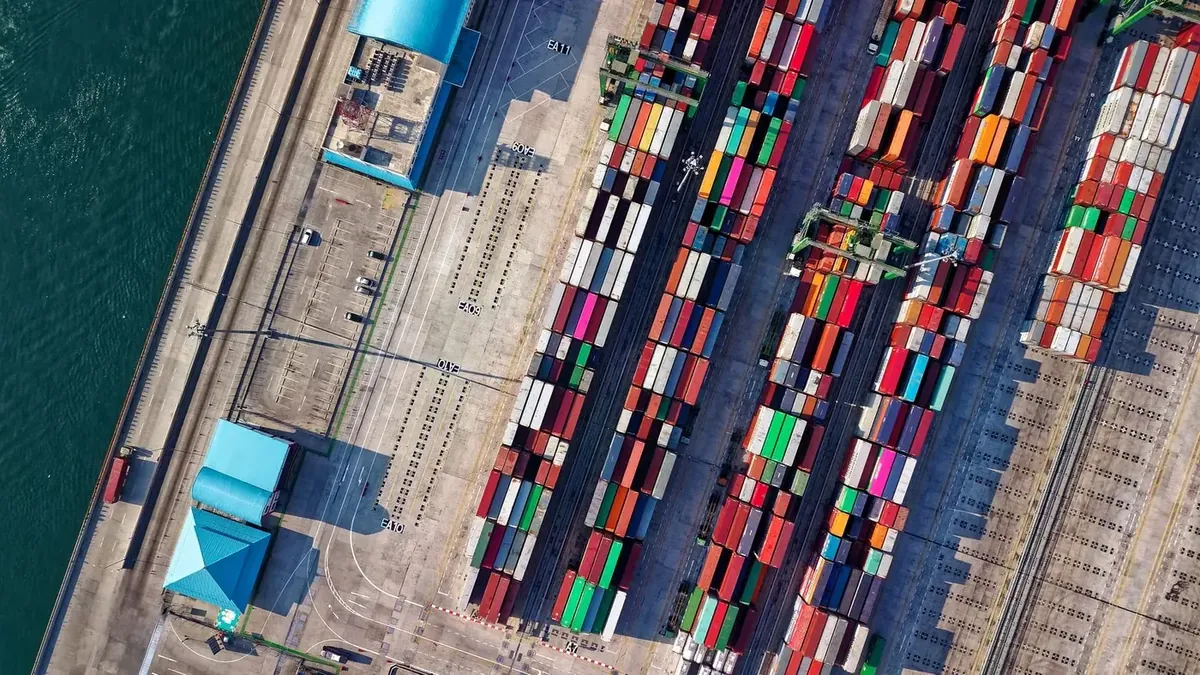
A fleet that lives outside your walls
Containers, skips, trailers and mobile units spend most of their life unattended and without power. They get lent out, moved around, left standing at a third party, and sometimes go missing. With no visibility over the fleet, you cannot know its real turnover rate, find a skip left behind on a site, or prove that a container has actually left.
Add to that the sprawling port zones and long international trips, sometimes outside cellular coverage, where the dot drops off the map at the worst moment. And when an asset with no ignition travels on a truck, matching it to the right tractor is often a headache.
What the container tells you
Where it is
Regular location updates, at the terminal, on the road or in a customer's yard. Geofencing on sensitive sites, an alert if the container moves without a work order.
What it goes through
Door opening, tilt and impact detection. A door that opens where it should not is an immediate alert, not a discovery at stocktaking.
What it carries
Bluetooth temperature and humidity sensors for sensitive goods: thresholds, alerts and a complete history, exportable as proof for your customers and insurers.
Maintenance-free
Batteries lasting up to 5 years depending on reporting frequency, waterproof housing fixed discreetly to the structure. You fit it, you forget it, it works.
Pair a trailer with its truck automatically
A BLE identification tag, fitted on the trailer or container, is read by the truck's onboard unit as soon as it comes close. The hitch recognises itself: the platform knows at all times which trailer is being pulled by which vehicle, with no action from the driver.
Each tag carries a unique identifier. The onboard unit filters the tags around it, keeps only yours and logs the proximity events, from approach to separation. That is how you follow an asset with no ignition through the vehicle towing it.
- BLE identification tags on trailers, containers and skips
- Read automatically by the tractor's onboard unit, no driver action
- Filtering by identifier: only your tags are kept
- Timestamped proximity events (approach, hitch, separation)
- Fitted in minutes, low-cost replacement
What you gain
Fewer losses and thefts, a turnover rate you finally measure, a fleet sized on figures rather than a hunch. BLE fitting is quick and replacing a tag stays inexpensive. The gains depend on your organisation; we estimate them with you before the quote.
From a port terminal to a depot, no blind spot
A container leaves the terminal, sets off on a semi-trailer to a seaport, goes on board, crosses a zone with no mobile network, then reaches a depot abroad. The self-powered tracker reports its position on movement or on a scheduled rhythm. Where cellular no longer reaches, the satellite link takes over: the dot keeps moving on the map.
On arrival, the container's BLE tag is recognised by the onboard unit of the truck that picks it up. The hitch is logged, the door and the reefer temperature stay monitored. You follow the goods end to end, without ever calling to ask where they are.
- Reporting on movement or at a scheduled interval
- Satellite fallback in areas with no coverage
- Temperature and door sensors for refrigerated units
- BLE recognition when picked up by a tractor
Frequently asked questions
How do I locate a container or skip left unattended?
A self-powered battery tracker, fixed to the container or skip, reports its position on movement or on a scheduled rhythm. No electrical connection, no user action: the asset shows on the map even when left for weeks on a remote site.
Does GPS work inside a metal container?
The tracker is fixed to the outside of the structure or at a spot chosen for reception. When the GPS signal drops, for instance in a ship's hold or when stacked, positioning switches to the cellular network and returns to full precision on the way out.
Can a trailer be paired with its truck automatically?
Yes. A BLE tag on the trailer or container is read by the truck's onboard unit as soon as it comes close. The hitch recognises itself with no driver action, and the platform knows at all times which trailer is being pulled by which vehicle.
How do I track a container in an area with no mobile coverage?
The tracker stores its positions and sends them as soon as a network returns. In lasting dead zones, ports, open sea or remote regions, the satellite link takes over from cellular to keep reporting the position. Tracking does not stop at a border crossing or a terminal.
How do I measure and improve the utilisation rate of a trailer fleet?
Every move, stop and idle period is timestamped. You see which trailers are working and which sit idle on a site, and you allocate the fleet accordingly. The turnover rate becomes a measured figure, not a guess.
Can I monitor the temperature of a refrigerated container?
Yes. Bluetooth temperature and door sensors monitor refrigerated containers and reefer trailers. You get an alert as soon as a threshold is crossed or a door opens at the wrong time, with an exportable history as proof for your customers and insurers.
See also
Asset tracking
Trailers, machines and equipment with no ignition, self-powered trackers up to 5 years.
Learn moreFleet management
Your tractors and vehicles in real time, CAN bus and reports on a single platform.
Learn moreTransport and logistics
Tachograph, cold chain and reliable ETAs for your customers.
DiscoverHow many containers to track?
Fleet size, zones to watch, sensitive goods: describe your needs and we will size the solution and its subscription.